10 Ways to Improve Your Google Search Ranking
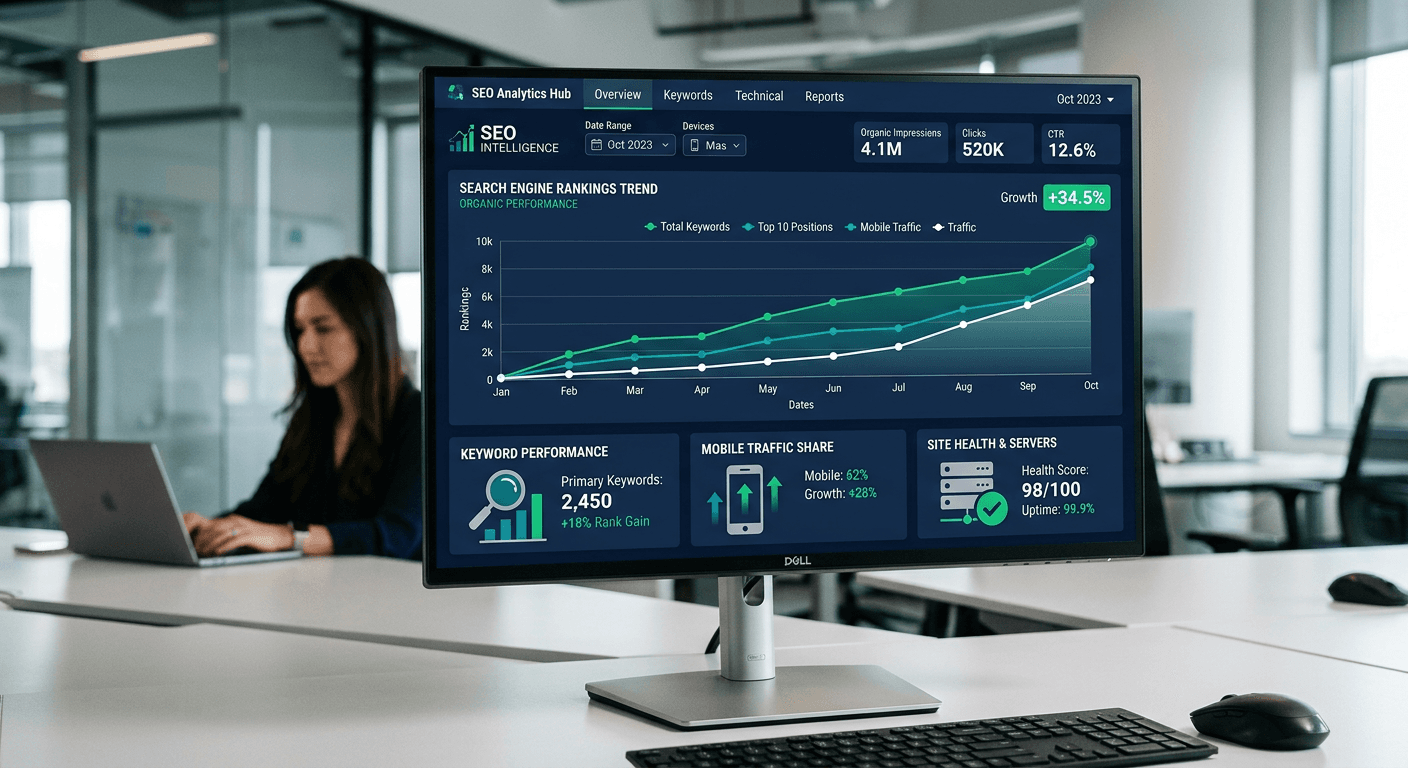
Optimizing your digital presence requires a sophisticated understanding of how search engines interpret intent and authority. Improving your google search ranking is not a matter of luck; it is a technical discipline that blends content strategy, site architecture, and performance optimization. By leveraging a professional google search ranking tool, you can gain granular insights into where your site stands, but the true growth comes from actionable, data-driven refinements that align with search engine guidelines.
Quick Summary {#quick-summary}
Improving your search ranking involves systematic technical optimization, high-quality content creation, and consistent performance monitoring. By auditing your site against search engine criteria, you can identify technical bottlenecks and authority gaps. Effective management requires constant evaluation of search intent and adherence to structured, user-first design patterns.
- Prioritize technical site health and core web vitals.
- Align content strictly with user search intent.
- Utilize a google search ranking check to track progress.
- Build sustainable domain authority through high-quality backlinks.
- Optimize metadata and site structure for better crawler indexing.
Table of Contents {#table-of-contents}
- 1. Technical SEO and Core Web Vitals
- 2. Deep-Dive Keyword Research and Intent Alignment
- 3. Implementing Structured Data Markup
- 4. Optimizing for Mobile-First Indexing
- 5. Content Quality and E-E-A-T Compliance
- 6. Strategic Internal Linking Architecture
- 7. Backlink Profile Health and Authority Building
- 8. Utilizing Analytics to Monitor Search Metrics
- 9. Improving Page Loading Velocity
- 10. Regularly Auditing Competitor Search Data
- FAQ
- Recommended Reads

1. Technical SEO and Core Web Vitals {#1-technical-seo-and-core-web-vitals}
Technical SEO forms the foundation upon which all other ranking efforts rest. If search crawlers cannot effectively parse your code, your content remains invisible regardless of its quality. This involves maintaining a clean sitemap, resolving crawl errors, and ensuring your site architecture is logical. You can visit https://rapidwombat.us.com to understand how structural integrity impacts overall indexing efficiency.
Focusing on Core Web Vitals is mandatory for modern rankings. Metrics like Largest Contentful Paint (LCP) and Cumulative Layout Shift (CLS) are direct ranking signals. By minimizing heavy script execution and optimizing resource delivery, you ensure that the search engine interprets your site as user-friendly, which is a significant factor in how the algorithm assigns value to your pages.
2. Deep-Dive Keyword Research and Intent Alignment {#2-deep-dive-keyword-research-and-intent-alignment}
Keyword research has evolved beyond simple volume analysis; it is now about decoding the 'why' behind a user query. Whether a user is performing a check google site ranking or looking for educational material, your content must match the expected format. If the top results are guides, your page should be a guide. If they are tool comparisons, your page should be a listicle.
Intent alignment prevents high bounce rates and signals to the search engine that your site successfully resolves the user's problem. When you match search intent, you improve the dwell time and engagement metrics that inform future ranking decisions. Use your preferred google ranking website checker to see which keywords are driving the most relevant traffic to your competitors and refine your content accordingly.
3. Implementing Structured Data Markup {#3-implementing-structured-data-markup}
Structured data provides the explicit context that search engines crave. By using Schema.org vocabulary, you can tell the search engine exactly what your content is, whether it is a product, a review, a recipe, or a business listing. This often results in 'Rich Snippets,' which improve click-through rates (CTR) by making your search result stand out visually.
Implementing JSON-LD is the standard practice for adding this metadata. It is lightweight and does not clutter your site's visual appearance. Because structured data removes ambiguity, it helps the search engine associate your content with specific entities, which can lead to higher rankings for more complex, long-tail queries.
4. Optimizing for Mobile-First Indexing {#4-optimizing-for-mobile-first-indexing}
Search engines predominantly use the mobile version of your content for indexing and ranking. If your mobile site lacks content that is present on your desktop site, or if the layout is difficult to navigate on touch screens, your search visibility will suffer significantly. Prioritizing responsive design is no longer optional; it is the industry standard.
Beyond responsiveness, consider the mobile-specific user experience. Avoid intrusive pop-ups, ensure buttons are easily clickable, and maintain readable font sizes without the need for pinching and zooming. Adherence to these standards, as detailed in our https://rapidwombat.us.com/privacy policy regarding user data and experience, ensures you meet the criteria for mobile-first search rankings.
5. Content Quality and E-E-A-T Compliance {#5-content-quality-and-e-e-a-t-compliance}
E-E-A-T stands for Experience, Expertise, Authoritativeness, and Trustworthiness. To improve your rankings, your content must demonstrate that it is written by a subject matter expert. This means citing original sources, providing data-backed conclusions, and maintaining a transparent editorial process. Content that is thin or purely derivative will struggle to gain traction against highly authoritative domains.
Focus on creating evergreen, high-value assets. When you provide unique insights rather than regurgitating common knowledge, you are more likely to earn organic citations and backlinks. E-E-A-T is not just about the text itself, but also about the digital footprint of the authors and the transparency of the website publishing the content.
6. Strategic Internal Linking Architecture {#6-strategic-internal-linking-architecture}
Internal linking is the map you provide to search crawlers. By linking related articles together, you pass 'link equity' (ranking power) from your high-performing pages to newer or less visible ones. A strong internal linking structure also keeps users on your site longer, reducing bounce rates and increasing the total number of pages crawled per visit.
Avoid generic anchor text like 'click here.' Instead, use descriptive keywords that tell the search engine what the target page is about. This contextual relevance reinforces the topical authority of your pages and helps clarify the hierarchy of your content, making it easier for the algorithm to categorize your site correctly.
7. Backlink Profile Health and Authority Building {#7-backlink-profile-health-and-authority-building}
Backlinks remain one of the most powerful signals of authority. However, quality drastically outweighs quantity. A single link from a high-authority, industry-relevant publication is worth more than hundreds of low-quality, spammy links. Regularly auditing your link profile to disavow toxic links is a crucial part of maintaining your site's integrity.
Focus on 'linkable assets'—content that provides value worth referencing, such as original research, case studies, or comprehensive data compilations. When other experts in your field cite your work, it creates a trust signal that is incredibly difficult for competitors to replicate through technical SEO alone.
8. Utilizing Analytics to Monitor Search Metrics {#8-utilizing-analytics-to-monitor-search-metrics}
To improve, you must measure. Tracking google search metrics is the only way to know if your changes are working. Pay close attention to impressions, average position, and the click-through rates of specific queries. This data allows you to pivot your strategy if a specific campaign is failing to gain traction.
Use your dashboard to identify 'near-misses'—keywords where you rank on the second or third page. These are low-hanging fruit. Often, adding a few hundred words of intent-focused content or improving the page speed of these specific URLs is enough to bump them to the first page of search results.
9. Improving Page Loading Velocity {#9-improving-page-loading-velocity}
Page speed is a critical ranking factor that impacts both user satisfaction and crawl budget. If your site takes more than three seconds to load, your abandonment rates will spike. Optimize your images by using modern formats like WebP, minify your CSS and JavaScript files, and leverage browser caching to deliver content faster.
Check your server response time and evaluate your hosting solution. If your site is frequently experiencing latency, it may be time to move to a more robust hosting environment. Fast-loading sites are rewarded by search engines because they provide a better experience, directly influencing your standing in the search results.
10. Regularly Auditing Competitor Search Data {#10-regularly-auditing-competitor-search-data}
Your competitors are constantly shifting their strategies. Using a google search ranking tool to monitor their moves allows you to identify new keyword opportunities or content gaps. If you notice a competitor ranking for a term you are targeting, analyze their content structure and backlink profile to understand why they are winning.
This is not about copying; it is about benchmarking. Look for commonalities in their success and apply those learnings to your own site in a way that provides superior value to the user. Review our https://rapidwombat.us.com/terms to understand the professional standards of web engagement that guide these analytical practices.
FAQ {#faq}
- What is the most accurate google search ranking tool to use? There is no single "best" tool, but industry leaders offer robust dashboards that provide tracking, competitor analysis, and site health audits. Choose one that offers deep reporting capabilities.
- How often should I check my google site ranking? Checking daily can lead to obsessing over minor fluctuations. Weekly or bi-weekly check-ins are generally sufficient for identifying trends and actionable insights.
- Do meta tags still matter for search rankings? While they are not the primary ranking factor, well-written meta descriptions improve your click-through rate, which serves as a secondary signal to search engines that your result is relevant.
- Why is my site ranking dropping? A drop can be caused by technical issues, algorithm updates, or increased competition. Use your ranking tool to see if the decline is site-wide or specific to certain pages.