5 SEO Analytics Tools You Need for 2026
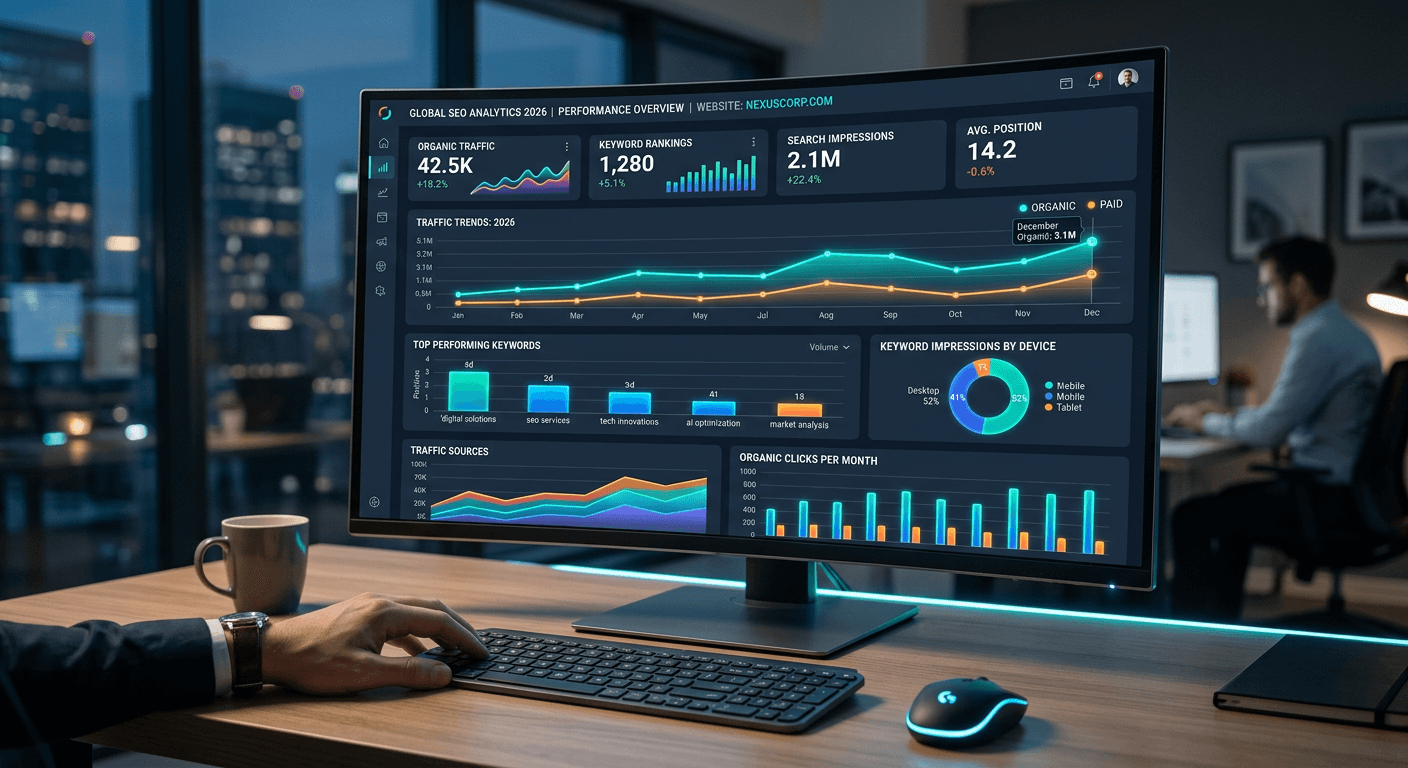
Selecting the right software to track your digital footprint is essential for maintaining a competitive edge in 2026. As search intent shifts toward high-quality, user-centric content, mastering seo analytics is no longer optional for growth-focused marketing teams. These tools bridge the gap between raw data collection and actionable strategy, allowing you to refine your content pipelines and maximize ROI.
Quick Summary {#quick-summary}
SEO analytics tools provide deep insights into website performance, traffic sources, and user behavior. They allow marketers to track keyword rankings, monitor technical health, and optimize conversion paths based on objective data rather than intuition.
- Track organic visibility through precise keyword performance monitoring.
- Uncover user intent behind specific landing pages.
- Leverage technical audits to resolve crawlability issues.
- Attribute revenue growth to specific high-performing marketing channels.
Table of Contents {#table-of-contents}
- Comparison of SEO Analytics Platforms
- Integrated Ecosystems for Universal Tracking
- Technical SEO Audit Specialists
- Content Performance and Keyword Intelligence
- Data Visualization and Custom Reporting Suites
- Competitor Intelligence Platforms
- Choosing the Right Analytics Stack
- FAQ
- Recommended Reads

Comparison of SEO Analytics Platforms {#comparison-of-seo-analytics-platforms}
| Feature | Ecosystem Suites | Audit Specialists | Content Platforms | Reporting Suites | Competitor Intel |
|---|---|---|---|---|---|
| Primary Goal | General Tracking | Technical Health | Content Strategy | Visualization | Market Benchmarks |
| Pros | All-in-one data | Deep site crawl | Keyword gap analysis | Custom dashboards | Market positioning |
| Cons | Can be overwhelming | Limited business data | Fewer technical tools | Data connection cost | High price point |
| Audience | SMB to Enterprise | Devs/Technical SEO | Content Marketers | Agencies/Consultants | Strategy Directors |
Integrated Ecosystems for Universal Tracking {#integrated-ecosystems-for-universal-tracking}
For most businesses, google analytics seo tools represent the foundation of a digital strategy. These platforms offer a broad view of user behavior, helping you connect the dots between how a user arrives at your site and their eventual conversion. While standard platforms provide foundational data, leveraging the google analytics url builder is a critical step for accurately tracking campaign performance across fragmented marketing channels.
By ensuring every external link contains UTM parameters, you convert mysterious traffic into identifiable marketing successes. This level of granularity is vital for calculating the true cost of acquisition and justifying your budget allocations to stakeholders.
- Pros: Native integration with search ecosystems; massive database of query history.
- Cons: Steep learning curve for advanced data studio configurations.
Technical SEO Audit Specialists {#technical-seo-audit-specialsists}
Technical performance determines whether your site can even be indexed, let alone ranked. Specialized audit tools scan every page of your site to identify broken links, missing meta descriptions, and improper redirect chains. Understanding your google analytics search terms through the lens of technical health allows you to prioritize high-value pages that currently suffer from slow load times or crawl errors.
Effective technical monitoring involves automated scheduling. By running bi-weekly audits, you catch site-wide issues before they impact your SERP positions. For further details on how structural integrity influences performance, consult our guide on website marketing analytics.
- Pros: Immediate identification of "blockers" for search crawlers.
- Cons: Can be expensive if managing sites with millions of pages.
Content Performance and Keyword Intelligence {#content-performance-and-keyword-intelligence}
Content is the currency of the internet, but only if it matches user intent. Content performance platforms allow you to analyze the semantic relevance of your pages. They compare your current performance against top-ranking competitors for target keywords, offering suggestions on keyword density, structure, and media inclusion to boost your rankings.
These platforms excel at finding "low-hanging fruit"- existing articles that require only minor updates to capture higher traffic volumes. By aligning your content strategy with search intent data, you ensure your production efforts consistently hit the mark.
- Pros: Actionable insights for on-page optimization.
- Cons: Requires active management to implement suggestions.
Data Visualization and Custom Reporting Suites {#data-visualization-and-custom-reporting-suites}
Data is useless if it cannot be presented clearly to decision-makers. Visualization tools act as the connective tissue between complex databases and boardroom presentations. They allow you to pull data from various APIs into single, interactive dashboards that refresh in real-time.
Whether you need to report on organic traffic spikes or conversion rate changes, these tools enable bespoke reporting that highlights what matters most to your stakeholders. When reviewing data, always verify your integration endpoints to ensure you are seeing a privacy compliant and accurate view of your funnel.
- Pros: Unmatched clarity for client/executive reporting.
- Cons: High setup time to build custom dashboard templates.
Competitor Intelligence Platforms {#competitor-intelligence-platforms}
To lead your market, you must understand the strategies fueling your competitors. Competitor intelligence tools track backlink profiles, organic keywords, and paid search spend. They provide a clear view of where your competitors are winning and where they are vulnerable.
By identifying the keywords your competitors rank for, you can build your own content strategy to capture that search volume. These tools are the ultimate cheat sheet for tactical planning, allowing you to allocate resources toward gaps in the market that your rivals have overlooked.
- Pros: Strategic advantage through comparative analysis.
- Cons: Data can be estimated rather than 100% accurate.
Choosing the Right Analytics Stack {#choosing-the-right-analytics-stack}
Selecting a tool depends heavily on your team's size and technical expertise. For small businesses, an all-in-one ecosystem tool is often sufficient. Enterprise teams, however, typically require a "stack" comprising a technical auditor, a visualization platform, and a competitor intelligence solution.
Focus on tools that offer robust API capabilities. The future of 2026 marketing is automation; you want your analytics data to trigger workflows, such as automatically notifying a copywriter when a high-value keyword drops in rank. Avoid platforms that trap your data behind proprietary, inaccessible walls.
FAQ {#faq}
- How do I improve my visibility using Google Analytics? Use the custom tracking tools to identify which specific search terms bring in the most converting traffic, then optimize your high-traffic pages to match that intent.
- Is a manual audit better than an automated one? Automated tools are better for speed and scale. Reserve manual audits for deep-dives into UX and conversion rate optimization (CRO) after automated tools have flagged potential issues.
- Why does my traffic data differ between tools? Each tool uses different sampling methods and attribution models. Focus on relative trends (e.g., is traffic increasing month-over-month?) rather than comparing absolute numbers between different platforms.