How to Conduct Effective Local SEO Keyword Research
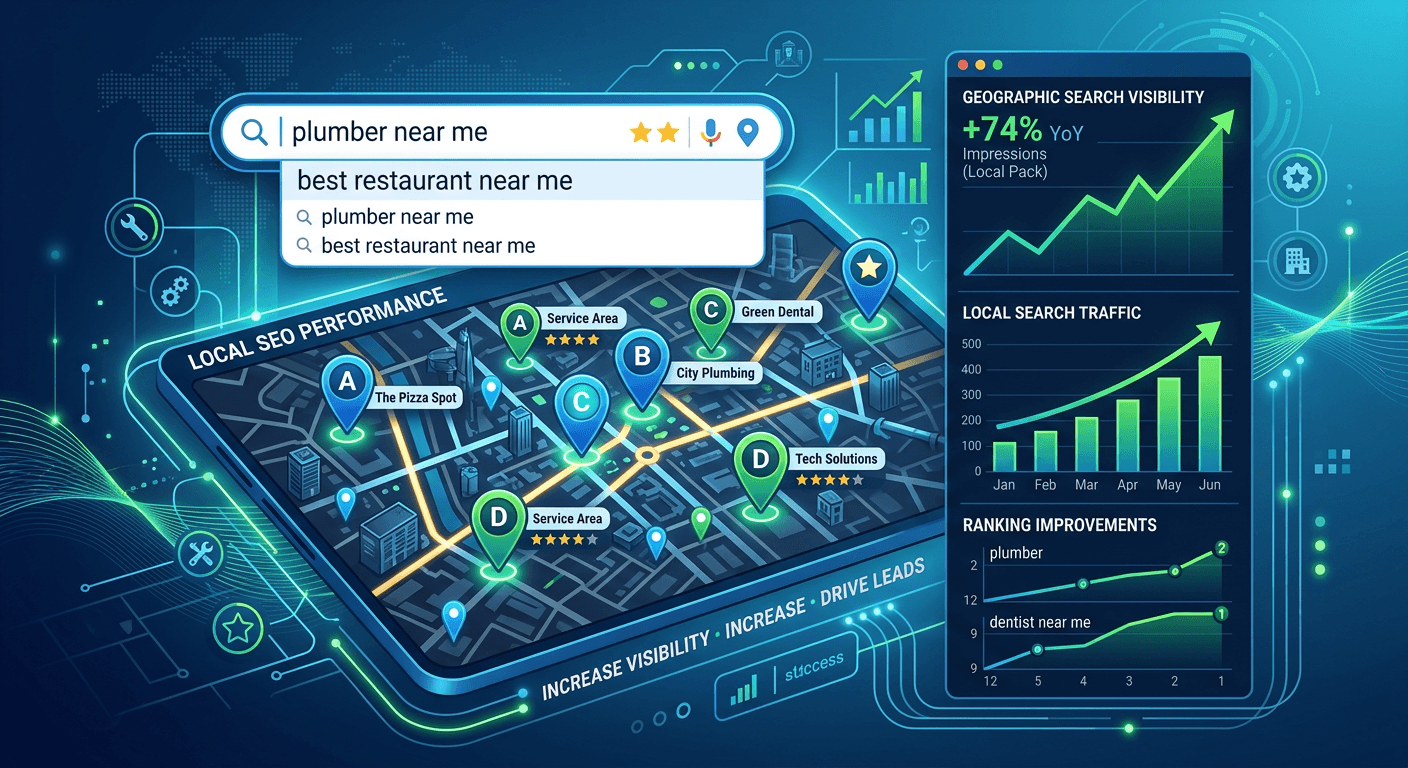
Conducting effective local seo keyword research is the foundational step for any business aiming to capture geographic-specific traffic and improve visibility in map-based results. Unlike traditional search engine optimization, which focuses on broad intent, local search seo prioritizes proximity, relevance, and prominence. By identifying the exact terms your neighbors and local customers use, you bridge the gap between their immediate needs and your services.
Quick Summary {#quick-summary}
Local seo keyword research is the process of identifying location-based search queries that drive store visits and service inquiries. It centers on geo-targeted phrases that connect your business to consumers within your physical service area.
- Prioritize "near me" and city-specific long-tail keywords.
- Audit existing google business seo performance to find missed opportunities.
- Leverage location modifiers to capture high-intent traffic.
- Track performance using specialized local seo rankings dashboards.
Table of Contents {#table-of-contents}
- Understanding Local Search Intent
- Leveraging Tools for Keyword Discovery
- Analyzing Competitor Strategies
- Optimizing for Google Business Profiles
- Implementing Your Keyword Strategy
- Common Pitfalls and Troubleshooting
- Frequently Asked Questions
- Recommended Reads

Understanding Local Search Intent {#understanding-local-search-intent}
Local search intent is distinct because it often signals an immediate transaction or physical visit. When a user searches for "plumber in Austin" or "best coffee shop near me," they aren't looking for broad informational content; they are looking for a service provider or destination that satisfies a need in their immediate vicinity. Recognizing this distinction is vital for local seo keyword research success.
To effectively target these users, you must look beyond high-volume, generic keywords. Focus on terms that combine a core service with a geographic modifier. For example, instead of just "roofing," prioritize "residential roofing services in [City Name]." This nuance reduces competition from national brands and puts your business in front of people who are actually capable of visiting your location.
Leveraging Tools for Keyword Discovery {#leveraging-tools-for-keyword-discovery}
Manual research is a starting point, but professional google local seo software provides the data-driven insights necessary to identify high-value opportunities. These tools allow you to see search volume at a city or zip code level, which is critical for businesses operating in smaller service areas where national tools might report zero volume.
Start by inputting your primary service keywords into these platforms and filtering by location. Look for "low difficulty" and "high intent" phrases. Pay close attention to search suggestions in the Google search bar itself, as these "auto-complete" suggestions are a direct reflection of real user behavior in your specific geographic region.
Analyzing Competitor Strategies {#analyzing-competitor-strategies}
One of the most effective ways to improve your local seo rankings is to reverse-engineer the success of your top-performing local competitors. Identify the top three businesses appearing in the "Map Pack" and analyze the keywords they are naturally weaving into their business descriptions, service pages, and review responses.
Analyze their website architecture. Does a competitor have a dedicated page for every neighborhood or city they serve? If so, they are likely dominating through hyper-local content. Create a spreadsheet listing these keywords and evaluate whether your site can provide a more comprehensive or helpful resource for those same terms.
Optimizing for Google Business Profiles {#optimizing-for-google-business-profiles}
Your Google Business Profile is the hub of your local search presence. Keyword optimization here is different from standard SEO because it relies on categories and attributes. Ensure your primary and secondary categories are selected correctly, as these act as implied keywords for the algorithm.
Beyond categories, use your business description and the "Services" or "Products" sections to naturally incorporate location-based keywords. Avoid keyword stuffing; instead, describe what you offer in the areas you serve. This helps Google associate your entity with those specific locations when a user performs a search that matches your profile attributes.
Implementing Your Keyword Strategy {#implementing-your-keyword-strategy}
- Build a list of seed keywords (Services + Locations).
- Use a local keyword tool to expand this list with volume and difficulty data.
- Create landing pages for each primary service area.
- Ensure your name, address, and phone number (NAP) are consistent across the web.
- Monitor how these changes impact your rank position over a 30-day cycle.
Pro Tip: Focus on "service area" pages rather than just your homepage. A dedicated page for "Emergency HVAC repair in North Denver" will almost always outrank a generic "HVAC Services" page for that specific query.
Common Pitfalls and Troubleshooting {#common-pitfalls-and-troubleshooting}
One common error is over-optimizing for locations where you do not have a physical presence or a verified service area. Google is increasingly sophisticated at detecting "spammy" location pages that offer no actual local utility. If you do not have a genuine footprint in a city, targeting it through deceptive landing pages can lead to penalties.
Another pitfall is ignoring user-generated content. Your reviews are goldmines for keyword research. If multiple customers mention "fast delivery" or "friendly staff in the Heights neighborhood," those are keywords you should intentionally feature in your service descriptions. Always address any drop in traffic by verifying if your business address data remains consistent across all citation sources.
Frequently Asked Questions {#frequently-asked-questions}
- How often should I update my keyword research? Perform a comprehensive review every quarter. Local competition fluctuates, and new neighborhood-specific terms emerge regularly.
- Do I need different keywords for Google Maps vs. Google Search? The core keywords are the same, but your delivery matters. Maps prioritize proximity, while traditional search results prioritize landing page relevance.
- How many keywords should I target per page? Focus on one primary "service + location" intent per page to avoid keyword cannibalization.
- Can I use keywords in my business name to rank better? Including keywords in your business name is a violation of Google's policies and can lead to profile suspension. Use your legal business name only.