The Future of SEO Automation in 2026
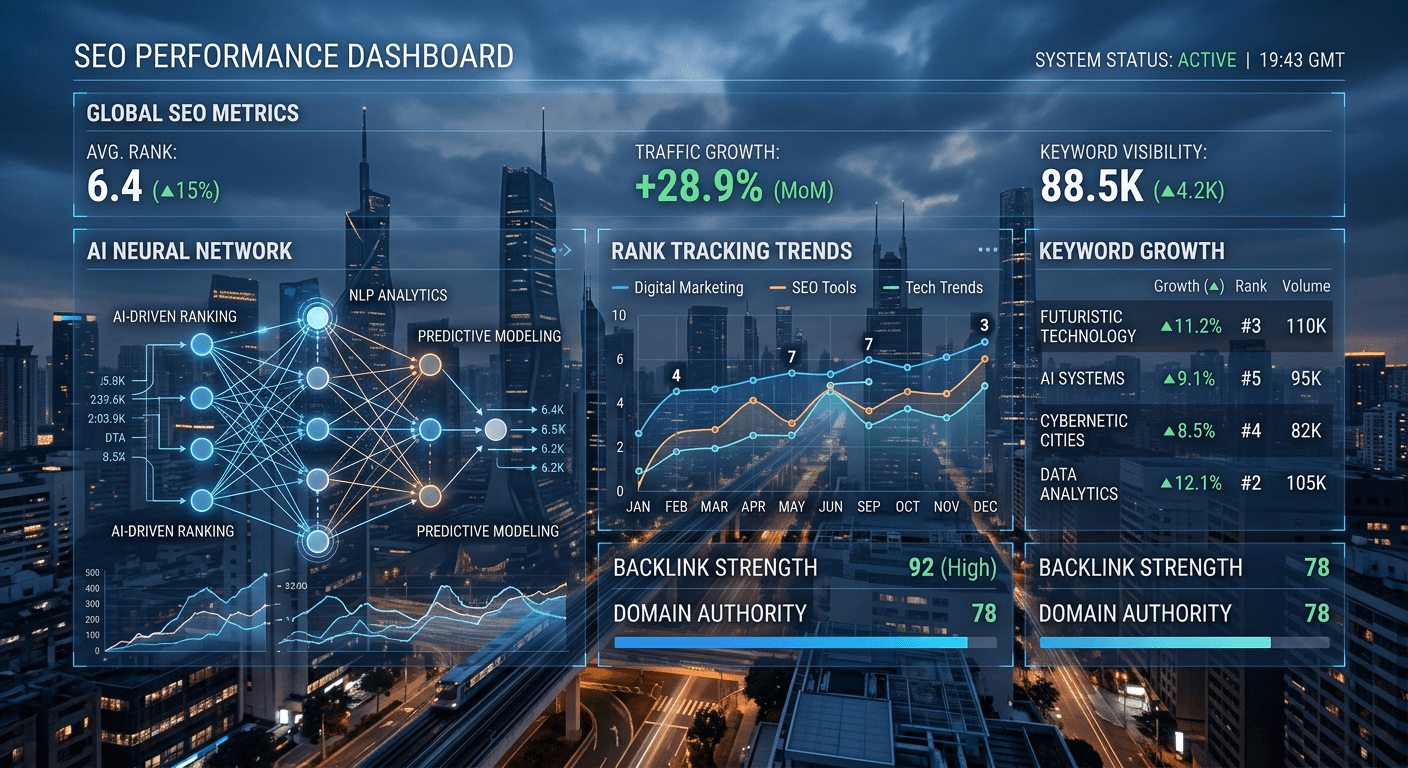
The landscape of search visibility is shifting rapidly as SEO automation tools evolve from simple task schedulers into sophisticated autonomous agents capable of complex strategy execution. In 2026, staying competitive requires moving beyond manual keyword tracking to leverage high-level systems that orchestrate content generation, technical audits, and predictive performance modeling at scale. Understanding how to integrate these technologies into your workflow is no longer optional for maintaining a strong digital footprint at https://rapidwombat.us.com.
Quick Summary {#quick-summary}
SEO automation involves using software to handle repetitive tasks like rank tracking, internal linking, and content optimization, now powered by advanced machine learning models. Modern solutions shift from reactive reporting to proactive search engine dominance by scaling technical and content operations without proportional increases in human effort.
- Automation reduces the overhead of routine technical site audits.
- Programmatic SEO allows for data-driven, massive-scale content deployment.
- Predictive analytics identify search trends before they hit peak volume.
- Human oversight remains critical for brand voice and strategic alignment.
Table of Contents {#table-of-contents}
- The Evolution of SEO Automation Tools
- The Mechanics of Programmatic SEO Tools
- Selecting the Best SEO Automation Tools
- Harnessing AI Driven SEO Tool Capabilities
- Practical Applications for SEO Tools AI
- Comparison of SEO Automation Strategies
- FAQ
- Recommended Reads

The Evolution of SEO Automation Tools {#the-evolution-of-seo-automation-tools}
Historically, SEO automation tools were limited to simple rank trackers and basic crawl reports that required significant manual interpretation. Today, these platforms operate as integrated ecosystems that connect directly to search consoles, analytics providers, and CMS platforms to trigger real-time changes. This shift from reporting to execution marks the most significant change in search engine optimization strategy in the last decade.
These modern platforms utilize APIs to pull raw data and apply proprietary algorithms to suggest—or perform—site architecture improvements. By automating the identification of broken links, duplicate content, and schema markup errors, businesses can focus their human resources on high-level content strategy and user experience design rather than troubleshooting infrastructure issues found in our https://rapidwombat.us.com/terms documentation.
The Mechanics of Programmatic SEO Tools {#the-mechanics-of-programmatic-seo-tools}
Programmatic SEO tools have fundamentally changed how brands capture long-tail keyword traffic. Instead of manually writing individual articles, programmatic systems use structured databases—such as spreadsheets or API-driven data sets—to generate thousands of unique, contextually relevant landing pages. This is particularly effective for e-commerce or local service-based businesses that need to target thousands of location-specific queries.
The core of this process lies in creating robust templates. A single well-optimized template combined with high-quality data feeds can populate pages that satisfy user intent across broad geographical or categorical spans. However, the risk of "thin content" remains, which is why modern programmatic tools now include AI-based logic to inject unique, human-like summaries into these dynamically generated pages.
Selecting the Best SEO Automation Tools {#selecting-the-best-seo-automation-tools}
When identifying the best seo automation tools for your organization, prioritize systems that offer native API integration and cross-platform compatibility. The goal is to choose an ecosystem that doesn't operate in a vacuum; if your tool cannot communicate with your CMS or your analytics suite, the automation is incomplete and will eventually create data silos that hinder growth.
Evaluate the vendor's commitment to API updates and data accuracy. In 2026, search algorithms change with unprecedented frequency, meaning your tools must receive rapid updates to remain effective. A platform that lags behind in patch frequency or model updates can lead to poor decision-making based on outdated information, potentially harming your site's search performance.
Pro Tip: Look for tools that provide "Human-in-the-loop" (HITL) workflows. Even the most advanced automation should prompt for human approval before pushing significant site-wide changes or publishing content, ensuring your brand integrity remains intact.
Harnessing AI Driven SEO Tool Capabilities {#harnessing-ai-driven-seo-tool-capabilities}
An ai driven seo tool is no longer just about generating text; it is about predicting search intent and content gaps. These tools now analyze competitor site architecture and identify why certain pages outrank yours, providing actionable insights into content length, semantic structure, and entity mapping. By understanding the underlying vectors that search engines use to evaluate topical authority, these tools can guide your content team toward higher relevance.
Furthermore, these tools are increasingly capable of performing sentiment analysis on SERP results. By analyzing the language, tone, and formatting of top-ranking pages, they provide a roadmap for your content strategy. This ensures that every piece of content you produce aligns with the specific "searcher intent" expected by the engine, dramatically increasing the probability of ranking in the top three positions.
Practical Applications for SEO Tools AI {#practical-applications-for-seo-tools-ai}
Using seo tools ai effectively means automating the tedious parts of technical audits and backlink analysis. For instance, AI-driven log file analyzers can identify crawling inefficiencies in seconds, pointing out pages that search engine bots struggle to access. This capability turns a week-long technical audit project into a continuous, real-time optimization stream.
In addition to technical performance, these tools facilitate advanced internal linking strategies. By mapping the relationship between your existing content and potential new pages, the system can suggest precise anchor text and link placement to boost the authority of key money pages. This level of granular control is impossible to maintain manually as your site grows into the thousands of pages.
Comparison of SEO Automation Strategies {#comparison-of-seo-automation-strategies}
| Feature | Traditional SEO | Modern Automation | Programmatic Approach |
|---|---|---|---|
| Content Scale | Low (Manual) | Medium (Hybrid) | High (Data-Driven) |
| Technical Audit | Periodic | Real-time | Continuous |
| Strategy Depth | Manual Analysis | Predictive Analytics | Pattern Recognition |
| Resource Needs | High Human Labor | Low/Medium Labor | High Initial Setup |
FAQ {#faq}
-
Will AI-driven SEO tools replace the need for an SEO manager? No. While AI tools handle execution and data processing, the strategic oversight, brand voice, and ethical decision-making still require human intelligence.
-
Are programmatic SEO pages considered spam by search engines? Not if they provide genuine value. Search engines flag "thin" or "useless" content; programmatic pages that offer useful data, tables, or context are rewarded.
-
What is the biggest risk of automating SEO tasks? Over-automation. Allowing a tool to make site-wide changes without human review can lead to indexing errors or unintentional keyword cannibalization.
-
How often should I audit my automated processes? At least quarterly. Even the best systems need calibration to ensure they are following current search engine guidelines and your business objectives.